Marwa Tahboub
- PhD Candidate in Media, Technology & Society
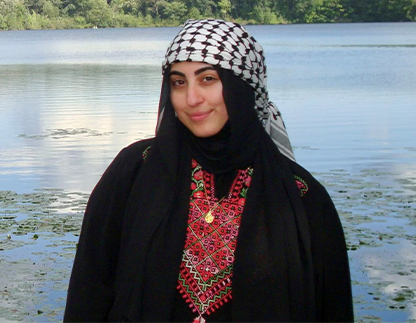
Marwa Tahboub is a Ph.D. candidate in Media, Technology & Society in the School of Communication. Her research focuses on nonprofit and mutual aid organizations involved in advocacy, collective action, and humanitarian aid, with a particular interest in how identity and politics shape individual giving and activism. Marwa is interested in what motivates people to support collective efforts and how communities organize care and solidarity.
Tell us what inspired your research and/or work.
My background as a Syrian-Palestinian American has been a major driver for the work I do and the communities I’ve connected with throughout my PhD. I want my research to be deeply rooted in conversations of identity in these turbulent times. Connecting my research with real-world context feels like a way for me to advocate for the people I care about and remain grounded in why this work matters.
Whom do you admire in your field and otherwise, and why?
I admire my adviser, Dr. Michelle Shumate. Michelle has been a supportive and present mentor for my research for nearly six years. She balances many responsibilities while giving everyone in our lab so much care and attention. She has made all the difference for me in encouraging the organizing I do, guiding the topics I research, and being there when it gets overwhelming.
How do you unwind after a long day?
An ideal evening for me is spent at home. I’ll make myself an iced matcha, pick out a good movie, and work on a painting.
What inspires you?
Many things inspire me— animated shows and movies (especially Studio Ghibli), novels and manga, and a good latte at an artsy coffee shop.
What are you most proud of in your career to date?
My master’s thesis was on Muslim nonprofits’ engagement with the Black Lives Matter movement and their experiences with advocacy, education, and community care. After my study, I invited interviewees for a virtual webinar with guest speakers from the community, where they discussed their experiences navigating community care during tragedy and facing discrimination as minorities. In this supportive space, I saw the impact of representing minority voices in all fields and emphasizing intersectionality in our practice. I was happy to see how this event came together, and it has been a memory that has stood out to me over the years.
Published Date: June 30, 2026