Allegra Minor
- PhD Candidate in the Driskill Graduate Program and Department of Biochemistry and Molecular Genetics
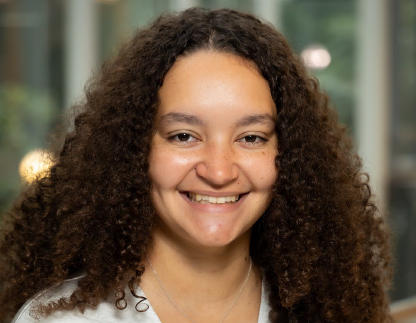
Allegra Minor is a PhD candidate in the Driskill Graduate Program and Department of Biochemistry and Molecular Genetics in the Feinberg School of Medicine. Her research focuses on using cellular senescence, a permanent form of cell cycle arrest, as a strategy to control tumor growth. Allegra was recently selected as a Bouchet Graduate Honor Society inductee and is also part of the Carcinogenesis Training Program associated with the Carcinogenesis T32 Training Grant.
How would you describe your research and/or work to a non-academic audience?
I focus on a cellular program known as senescence, which is a state in which cells undergo growth arrest (stop dividing/proliferating) but continue to be active in their environment by engaging the immune system, signaling to other cells, and producing molecules that can alter the niche in beneficial or deleterious ways. If we think about a tumor, which at its core is a group of cells dividing uncontrollably, we can see how pushing these cells toward this senescent state might be a viable therapeutic avenue; I am trying to figure out how to do this in an aggressive form of lung cancer known as KRAS, LKB1 mutant lung adenocarcinoma.
What have been some of the most memorable twists and turns of your career?
When I was younger, probably up until halfway through my freshman year, I was very adamant that I did not want to pursue a PhD even though I knew I wanted to do cancer research, so even being here is a pretty big twist.
What is the biggest potential impact or implication of your work?
The tumor types I study are incredibly aggressive, and patients that harbor these tumors have distinctly poor responses to standard care therapies. While the field has made a lot of progress recently with targeted therapies and immunotherapy, these tumors often develop resistance mechanisms that leave patients with few remaining options. If my research can identify a novel vulnerability that can be exploited to push tumor cells to undergo senescence, this could potentially provide new therapeutic strategies that are sorely needed.
Why Northwestern?
I grew up in Chicago and couldn't wait to return. I truly believe Chicago is the best place to live, and with the Lurie Cancer Center at the forefront of oncology and cancer research, I couldn't think of a better place to do my PhD.
How do you unwind after a long day?
By hanging out with my latest foster animal from One Tail at a Time. I started fostering during the second year of my PhD and in addition to getting to take care of adorable animals (6+ dogs, 2 bunnies and counting), there's an incredible community of other volunteers from all areas of the city and all walks of life.
What did you originally want to be when you grew up?
When I was three years old, I wanted to be a phlebotomist, which is admittedly an odd choice for a little kid, but after that phase, I knew pretty early on that I wanted to be involved in cancer research.
Tell us about a current achievement or something you're working on that excites you.
I was recently selected as a 2026 Bouchet Graduate Honor Society inductee. The Bouchet Society recognizes outstanding scholarly achievement and promotes excellence in doctoral education and the professoriate. 150 years ago, Edward Bouchet was the first African American to receive their PhD from an American university, and one of the first six people to receive their doctorate in physics in the United States.
What are you most proud of in your career to date?
I am most proud of the communities of support I have contributed to cultivating. Outside the lab, I have been involved in the Cancer Biology Cluster (CBC) leadership, and one of our main goals has been to find ways to promote belonging and empowerment among trainees. The CBC has expanded a lot since I first got involved, and it's been exciting to see how the effort we've put in behind the scenes has translated into tangible relationships and opportunities for my peers. I think many of the people I've encountered at Northwestern, and the CBC especially are incredibly dedicated to creating a supportive culture, and I try to carry that forward into my work as well.
I was originally computationally trained, and while my current research isn't as computationally intense as what I was exposed to previously, my lab mates and I still make use of bioinformatic analyses in our research. I recognize that even the most well-documented bioinformatics tools can be daunting if you haven't been exposed to them, so I always aim to be a resource and provide support where I can. It's fun getting to work that muscle and incredibly rewarding to see my lab mates gain independence and confidence in a skill that may be new to them!
Published Date: June 9, 2026