Attend a Presidential Fellows Lunch & Learn Event
Hear from Soumya Shailendra, PhD candidate in Comparative Literary Studies, and Eduardo Campos Chávez, PhD candidate in Interdisciplinary Biological Sciences (IBiS).
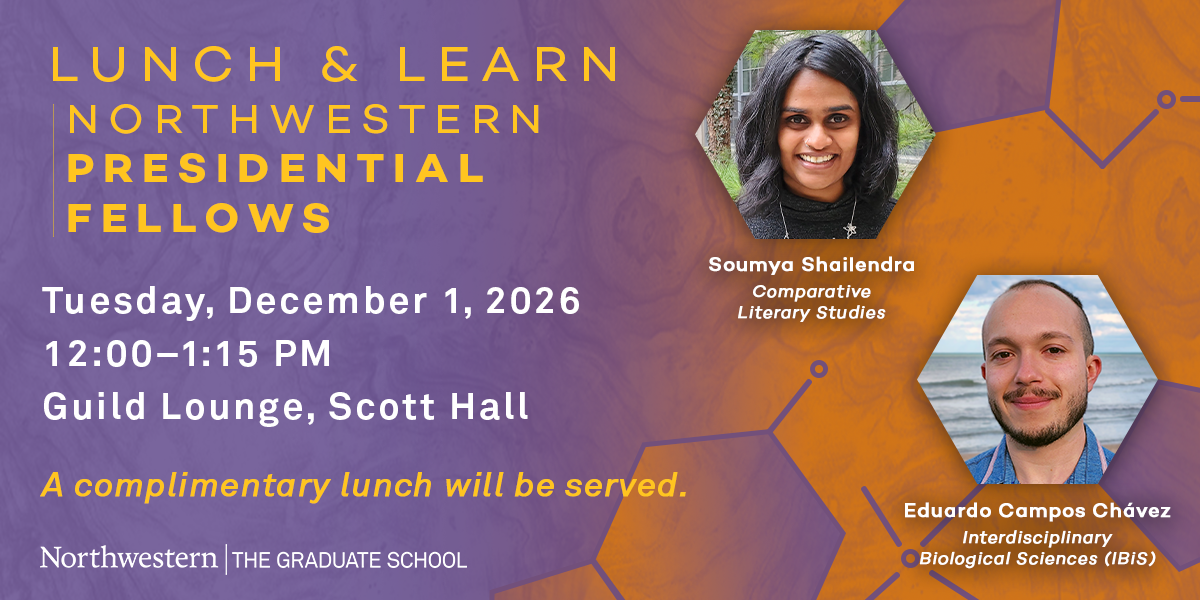
Please join The Graduate School (TGS) for a Lunch & Learn event featuring two of Northwestern's Presidential Fellows, which is the most prestigious fellowship awarded by the University. From cellular signals to social reform, this thought-provoking event will explore some of the complex systems that make up our world.
Tuesday, December 1 from 12:00–1:15 PM
Guild Lounge, Scott Hall
Evanston campus
Lunch
Enjoy a complimentary lunch while connecting with colleagues and learning about innovative, interdisciplinary work happening on campus. A variety of food options will be served to accommodate dietary needs.
Learn
During lunch, hear brief research presentations from Soumya Shailendra, PhD candidate in Comparative Literary Studies, and Eduardo Campos Chávez, PhD candidate in Interdisciplinary Biological Sciences (IBiS). Shailendra will share her research on how law and literature serve as important sites of reform and redress in the global anti-case movement. Chávez will share his research on noncoding RNAs and the complex mechanisms these molecules utilize to modulate essential biological processes.
This event is free and open to all members of the TGS community.
Please email tgs-events@northwestern.edu with any questions.
About the Fellows
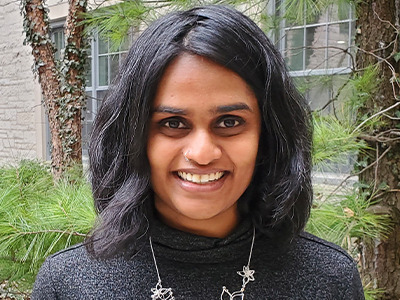
Soumya Rachel Shailendra
Soumya's research specializes in postcolonial theory, modern South Asian literature, and the histories of caste radicalism. Her dissertation examines how law and literature serve as important sites of reform and redress in the global anti-caste movement. Working within a multilingual and multimodal archive, she investigates how Dalit writers—authors from historically marginalized castes—deploy legal idioms to challenge their incorporation into institutions of liberal statehood.
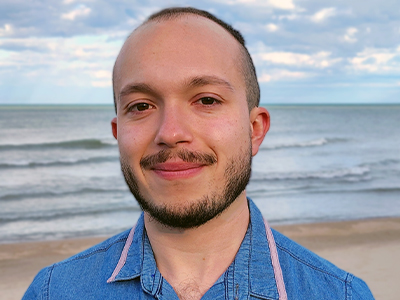
Eduardo Campos Chávez
Eduardo studies the role of RNA molecules in cellular regulation. His research primarily focuses on riboswitches—specialized RNA structures that control gene expression in response to cellular signals. By exploring the extensive yet poorly understood domain of noncoding RNAs, often described as genomic "dark matter," his research sheds light on the complex mechanisms these molecules utilize to modulate essential biological processes. His work reveals important insights into the evolutionary adaptability of RNA and highlights potential avenues for developing novel antibiotic therapies.